
The Engineers and People Behind the Wankel Rotary Engine
Updated: Feb 13
The Wankel rotary engine stands apart from every other internal-combustion design. Compact, smooth, and mechanically unconventional, it challenged the piston engine’s century-long dominance. A single inventor lit the match, yet a global network of engineers kept the flame from going out.
This is the story of those people, the ones who turned rotary theory into running engines.
Felix Wankel (1902–1988) Inventor of the Rotary Internal-Combustion Engine

Felix Wankel was the origin point. Born in 1902, he pursued an idea that inventors had chased for generations: a four-stroke engine cycle delivered through near-pure rotary motion. His breakthrough was discovering the combination of housing shape and rotor movement that could reproduce the four-stroke Otto cycle without pistons, connecting rods, or conventional valve gear. By the mid-1950s, with NSU supporting development, Wankel’s work finally stepped out of theory and into hardware.
That leap became undeniable on February 1, 1957, when the first NSU/Wankel engine, the DKM 54, ran for the first time in Neckarsulm, West Germany. The engine was a landmark, yet it was also a starting gun for a new set of problems: sealing, durability, heat control, and how to turn a fascinating machine into something that could survive daily use.
Dr. Walter Froede (born 1910) – The Engineer Who Made the Wankel Engine Work

This is where Dr.-Ing. Walter Froede enters as the essential translator between invention and practicality. Born on April 28, 1910, Fröde brought testing discipline and real-world engineering pressure to the early NSU program. His defining contribution came in 1957 when he helped drive the conversion of the Wankel concept into the KKM type engine, the layout that would shape nearly every production rotary that followed. Instead of the outer housing rotating, the housing remained fixed and the rotor orbited on an eccentric shaft. That decision sounds simple on paper, yet it changed everything about manufacturability and future development.
By 1960, Froede had authored early technical papers presenting details of the NSU/Wankel engine’s development, helping move the rotary from secrecy into the engineering mainstream.
Dr. Max Bentele (born 1909): The American Analyst Who Took the Rotary Seriously
As the rotary caught attention, it began crossing borders. In the United States, Dr.-Ing. Max Bentele became one of the most influential early rotary minds. Born in 1909, Bentele authored the first Wankel-engine analysis work for Curtiss-Wright and supervised rotary combustion research and development there through the mid-1960s. He also traveled to NSU in the late-1950s period to evaluate the Wankel engine’s potential. In a world of cautious corporations, Bentele helped give the rotary credibility as a serious engineering program, not a novelty.
Roy T. Hurley (1906–1971): The Executive Who Secured U.S. Wankel Rights
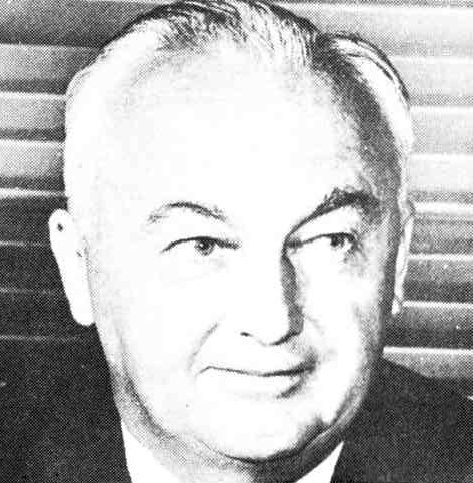
Corporate commitment mattered too. Roy T. Hurley played a decisive role in bringing NSU/Wankel licensing rights to America. In 1958, Curtiss-Wright secured licensing to develop Wankel engines, then publicly revealed the engine’s existence at a New York press conference on November 23, 1959. That moment turned rotary development into a public industrial race. Once the rotary was out in the open, more companies could justify spending money chasing it.
Wolf-Dieter Bensinger (born 1907): Daimler-Benz and Rotary Research at the Highest Level

Germany’s most prestigious automaker also stepped in. Wolf-Dieter Bensinger, born February 26, 1907, led Wankel engine design and development at Daimler-Benz. His work connected two eras: in the early 1930s he worked with Felix Wankel on rotary disc valves for aircraft engines, and decades later he renewed contact with Wankel in 1960 and helped initiate rotary engine research at Daimler-Benz. That effort reinforced the idea that the Wankel engine was not just a niche curiosity. It was a serious contender, at least for a time.
Kenichi Yamamoto (1922–2017): The Mazda Engineer Who Refused to Let the Rotary Die

Then the rotary’s fate pivoted east, where the most consequential long-term commitment emerged. In 1961, Toyo Kogyo (later Mazda) and NSU/Wankel initiated a cooperation agreement for Wankel engine development. That agreement became the launchpad for Mazda’s deep rotary identity, and it set the stage for the man most responsible for the rotary’s survival: Kenichi Yamamoto.

Yamamoto, born in 1922, became Mazda’s rotary backbone. His impact is not a single model or a single technical fix. It is the fact that Mazda kept going when the rotary’s weaknesses, especially sealing durability and emissions difficulty, made most manufacturers back away. Under Yamamoto’s leadership, the rotary moved from experimental promise into production reality. The Mazda Cosmo Sport 110S was designed in 1963, had its first prototype running in 1964, and reached public sale on May 30, 1967. From there, Mazda’s rotary lineup expanded quickly: the R100 arrived in 1968, the RX-2 was introduced in May 1970, and the RX-3 followed in September 1971.
The rotary didn’t survive because it was easy. It survived because Mazda learned how to live with it, improve it, and keep the expertise alive inside the company.
Jiro Morikawa (born 1925): The Leader Who Brought Mazda’s Rotary to the U.S.

Rotary development required more than engineering. Jiro Morikawa helped drive Mazda’s U.S. presence as the company moved into export markets. Mazda Motors of America was established at the beginning of 1971 to import, sell, and service Mazda vehicles in the United States. In practical terms, this is how rotary engineering became rotary reality for drivers: the support structure existed to sell and sustain the cars outside Japan.
George E. Miller: The Engineer Behind the First Quantity-Produced American Wankel

Rotary development also proved it could thrive beyond cars. In the U.S., George E. Miller at Outboard Marine Corporation led the design and development of the first quantity-produced American Wankel engine. His work showed that the rotary could be industrial and marine as well as automotive, expanding the engine’s credibility into new environments where compact packaging and smooth operation mattered.
Ichiro Hirose: The Modern Mazda Leader Behind Today’s Hybrid Rotary in Japan

The rotary story did not end with the classic era. Mazda’s modern hybrid rotary sold in Japan reflects a new understanding of what the Wankel does best. In a rotary-electric hybrid system, the rotary engine functions as a compact range extender generating electricity for an electric drivetrain. That role can keep the engine operating at steady, optimized speeds, leaning into smoothness and compactness while avoiding operating conditions that historically caused durability trouble. Mazda’s modern leadership in this space includes Chief Technology Officer Ichiro Hirose, representing the rotary’s evolution into a new chapter shaped by electrification rather than replacement.
The Wankel engine has always been more than a shape or a cycle. It is a relay race of decisions: Wankel’s breakthrough, Fröde’s practical architecture, Bentele’s American analysis, Hurley’s licensing push, Bensinger’s high-performance research culture, Yamamoto’s refusal to let the rotary die, and the modern reimagining that gives the engine a new job in a hybrid world.

Learn more about the rotary engine at the Tampa Bay Automobile Museum special rotary engine exhibit, where historic rotary-powered cars, motorcycles, and experimental designs bring this remarkable engineering story to life.